
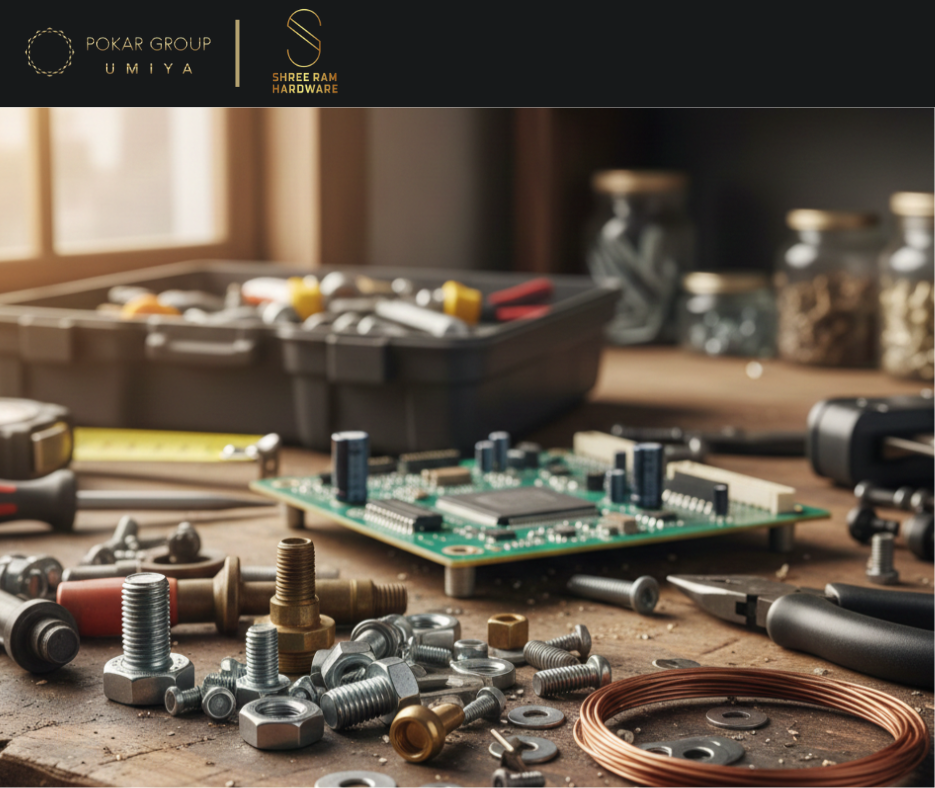
If there’s one thing I’ve learned after spending more than a decade around hardware businesses—manufacturers, distributors, site engineers, shop owners, and contractors—it’s this: hardware is never “just hardware.” It’s the invisible force that decides whether a project quietly lasts for decades or slowly starts falling apart within a few years. Early in my career, I used to walk through local hardware markets and construction sites, watching how people actually chose products. What struck me immediately was that decisions weren’t made by brand names printed on boxes or price tags alone. They were made through memory. A contractor remembers the bolt that snapped during tightening. A carpenter remembers the hinge that started squeaking after one monsoon. A fabricator remembers the fastener that rusted faster than promised. Hardware is built on these memories. Unlike paint or tiles, hardware doesn’t get second chances once it’s installed. It’s buried inside doors, structures, cabinets, machines, and pipelines. When it fails, it’s not just inconvenient—it’s expensive, disruptive, and reputation-damaging. That’s why seasoned professionals treat hardware with a seriousness that outsiders often underestimate. A good hardware product never asks for attention; it simply performs. A bad one demands it at the worst possible time. Over the years, I’ve come to respect how much responsibility sits in something as small as a screw or as ordinary as a latch. These components quietly carry weight, stress, movement, vibration, weather, and time. And when people say hardware is a “low-involvement” category, it’s usually said by those who have never dealt with the consequences of choosing the wrong one.
As you spend more time in this industry, you begin to see that true hardware expertise isn’t about memorizing specifications—it’s about understanding real-world behavior. On paper, two products may look identical, but on site, they can perform very differently. I’ve seen fasteners with impressive technical data fail simply because the coating wasn’t suited for the environment. I’ve seen beautifully finished handles deteriorate in commercial spaces because they weren’t designed for high-frequency use. Climate, usage patterns, installation practices, and even maintenance habits all influence how hardware ages. This is why experienced professionals ask better questions. Where will this be installed? How often will it be used? Will it face moisture, chemicals, vibration, or heavy load? Hardware today has evolved far beyond basic metal parts. Modern hardware involves metallurgy, precision engineering, surface treatments, load calculations, and compliance with safety standards. But what separates trustworthy brands from average ones is not just technology—it’s accountability. The best manufacturers test their products under stress conditions that mimic real life, not just lab environments. The best suppliers don’t oversell; they guide customers toward the right product, even if it means a slightly higher upfront cost. From a market perspective, this is also why search behavior has changed. Buyers are no longer searching for “cheap hardware.” They’re searching for “durable hardware,” “long-lasting fittings,” “industrial-grade fasteners,” and “reliable hardware suppliers.” That shift tells you everything about where the industry is headed. People are tired of replacing, repairing, and apologizing for failures. They want solutions that work quietly in the background, year after year.
What excites me most about the hardware industry today is that it’s slowly becoming more honest and more mature. Customers are asking smarter questions, and responsible businesses are responding with transparency instead of exaggerated claims. Sustainability, product lifespan, and total cost of ownership are finally getting the attention they deserve. I’ve seen many buyers willingly pay more for hardware that lasts longer, performs consistently, and reduces future headaches. And that, in my experience, is a sign of progress. Hardware may never be glamorous, but it is foundational. It holds together homes, offices, factories, infrastructure, and machines. When done right, it builds trust—not just in a product, but in the people who supply it. For businesses operating in this space, authority isn’t built through loud marketing; it’s built through years of dependable performance and word-of-mouth credibility. For buyers, the smartest approach is simple: never treat hardware as an afterthought. The smallest components often carry the greatest responsibility. After years in this industry, I can say this with confidence—hardware doesn’t just support structures; it supports reputations. And once you understand that, you stop choosing hardware based on convenience and start choosing it based on long-term confidence.